
Storytelling, Heritage and Connection: DIGITAL STORY Training Course Brings European Youth Workers to Ballyjamesduff
Updated: Jun 23
International Erasmus+ project explores how storytelling can strengthen communities and support young people
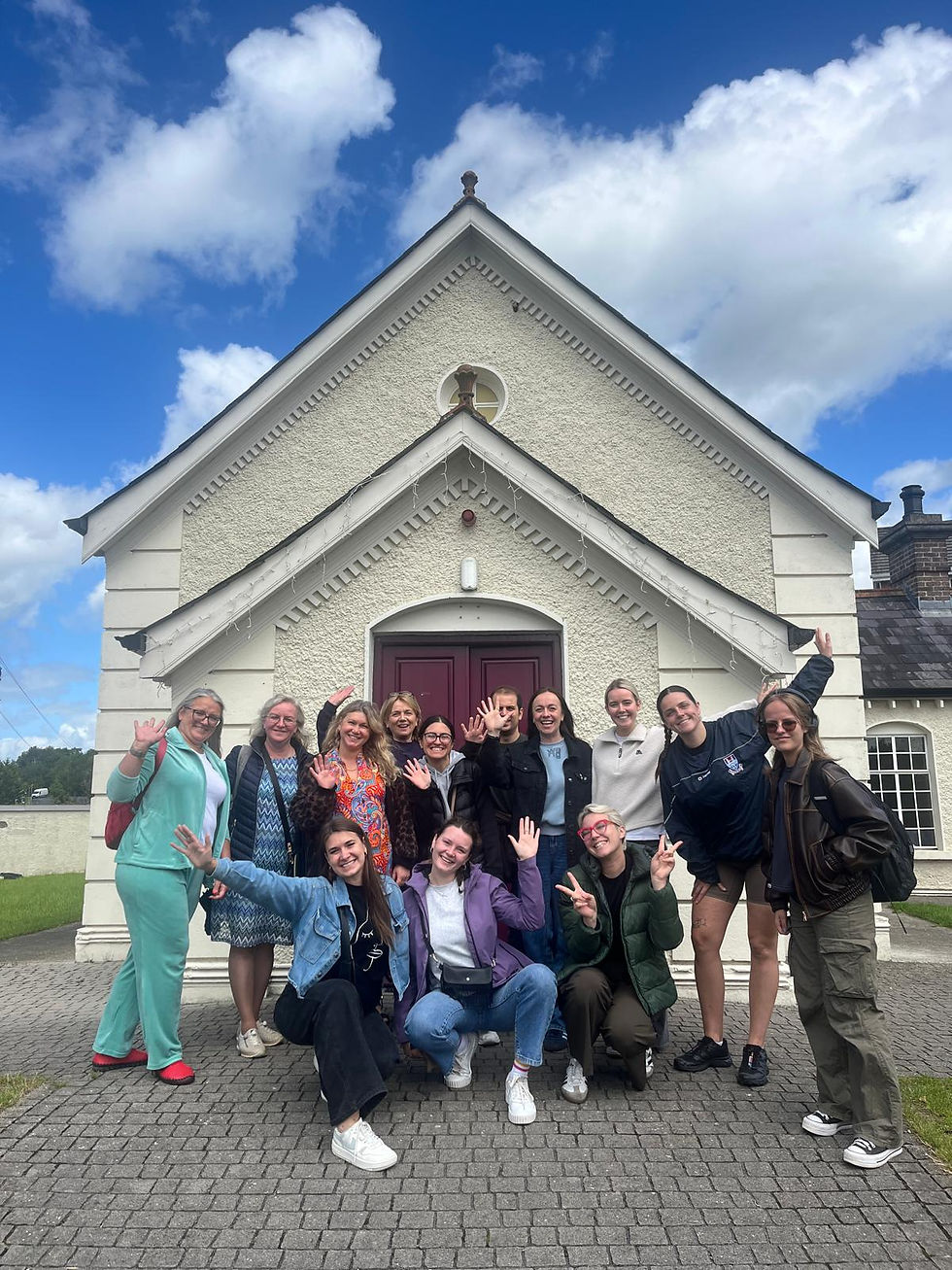
In August 2025, Teach Solais was delighted to welcome partners from Lithuania, Latvia and Italy to Ballyjamesduff for the DIGITAL STORY Training Course for Youth Workers, delivered as part of the Erasmus+ project DIGITAL STORY: From Community Building to Youth Employability.
Over three days, youth workers, educators and community practitioners came together to explore how storytelling can be used as a powerful tool for youth engagement, community building, cultural heritage preservation and employability. The training formed an important milestone in a project that has connected organisations across four European countries in a shared effort to support young people, particularly those living in rural communities, to develop confidence, skills and a stronger sense of identity through digital storytelling.
At its heart, DIGITAL STORY is built on a simple idea: everyone has a story worth telling. By helping young people discover, develop and share their stories, we can support communication skills, creativity, critical thinking, digital literacy and active citizenship. These are not only valuable life skills, but increasingly important skills for future education, employment and participation in society.
The training course in Ballyjamesduff provided an opportunity for project partners to share expertise, test learning activities and further develop the methodology that will now be used with young people in each partner country.
Rather than relying on traditional classroom-style learning, the programme was designed around participation, discussion and practical experience. Throughout the training, participants explored four core themes that sit at the centre of the DIGITAL STORY methodology: How to Tell a Story, Audience, Digital Storytelling and Ethics of the Story.
Each partner organisation contributed its own expertise to the programme, creating a rich learning environment shaped by different perspectives, experiences and cultural contexts. Participants were encouraged to reflect on their own practice, share examples from their communities and consider how storytelling can be adapted to meet the needs of different groups of young people.
A recurring theme throughout the training was the importance of understanding not only how stories are told, but who they are being told for. Discussions explored how audiences shape storytelling choices and how digital tools can help young people communicate their ideas in creative and meaningful ways. Participants examined practical approaches to creating digital stories, while also considering the opportunities and challenges that come with sharing stories online.
One of the highlights of the programme was the Ethics of the Story session facilitated by Teach Solais. As storytelling becomes increasingly digital, questions of responsibility, consent and representation are more important than ever. The session invited participants to move beyond technical skills and consider the human impact of the stories we create and share.
Through group discussions, case studies and practical exercises, participants explored themes such as consent and agency, representation and voice, truth and creative licence, cultural context and interpretation, and the long-term implications of sharing stories in digital spaces. These conversations recognised that ethical storytelling is not about following a rigid set of rules, but about approaching stories with care, empathy and awareness.
The session also challenged participants to think critically about how stories can be framed and interpreted. By exploring real-world scenarios and creative exercises, participants examined how language, context and perspective can influence how stories are understood. The discussions highlighted the importance of ensuring that storytelling empowers individuals and communities rather than speaking for them.
Beyond the training room, participants had opportunities to experience the local culture and heritage of County Cavan. A heritage walk through Ballyjamesduff encouraged participants to consider the relationship between place and story, exploring how communities are shaped by shared memories, traditions and experiences.
The programme concluded with a visit to Cavan County Museum and an interactive story-sharing session. The museum provided a fitting setting for reflection, offering participants the chance to engage with local history while considering the role storytelling plays in preserving and passing on cultural heritage. From personal memories and family histories to wider community narratives, the visit reinforced many of the themes explored throughout the training.
For Teach Solais, this connection between heritage and storytelling lies at the heart of community development. Stories help us understand where we come from, strengthen our sense of belonging and create opportunities for dialogue between generations. They can celebrate identity, preserve culture and encourage people to see value in their own experiences and those of others.
The training course also highlighted the value of international cooperation. While participants came from different countries and backgrounds, many of the challenges discussed were shared across communities: supporting young people to find their voice, creating meaningful opportunities in rural areas, and helping individuals feel connected to both their local community and the wider world.
The exchange of ideas, methods and experiences throughout the week demonstrated the strength of European partnership working. By learning from one another, project partners have developed stronger tools and approaches that will benefit young people long after the training has ended.
As the DIGITAL STORY project moves forward, the learning from Ballyjamesduff will help shape the next phase of the initiative. Trained youth workers will now use the methodology and resources developed through the project to support young people in creating their own digital stories, exploring their heritage, sharing their experiences and developing valuable personal and professional skills.
Teach Solais is proud to have hosted this important stage of the project and would like to thank all partners for their enthusiasm, expertise and commitment. The training course demonstrated that storytelling is far more than a creative activity. It is a way of building confidence, strengthening communities, preserving heritage and creating opportunities for young people to participate fully in the world around them.
As the project continues, we look forward to seeing the stories that emerge and the connections they create across communities and across Europe.


Comments